
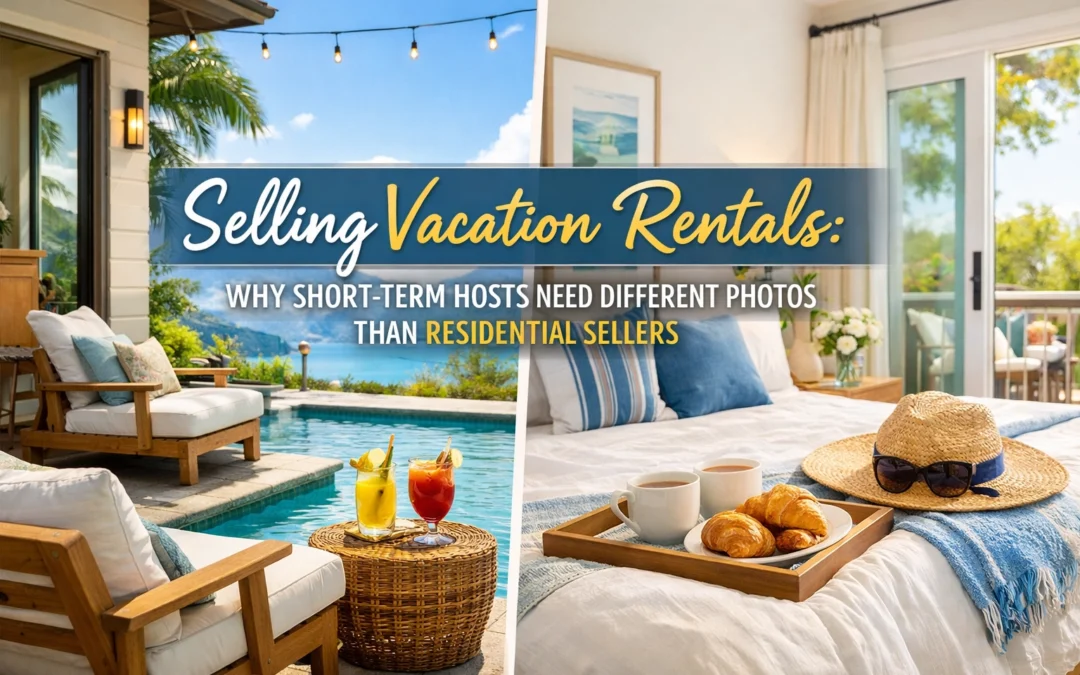
Here's the thing about vacation rental photography , if you're treating it like a residential listing, you're leaving money on the table.
We work with agents and hosts across Florida, from Jacksonville to Sarasota, and we've seen it firsthand. The Airbnb or VRBO host who uses standard real estate photography? They get views. The one who uses vacation-specific imagery? They get bookings.
The difference isn't subtle. It's the difference between showing someone a house and selling them a weekend escape.
You're Not Selling a Home , You're Selling an Experience
When you photograph a home for a residential sale, you're documenting a property. You're showing buyers the bones, the layout, the condition. You're answering the question: "Could I live here?"
Vacation rental photography answers a completely different question: "Will I have a great time here?"
That shift changes everything , from what you shoot to how you shoot it.
Residential buyers care about square footage, storage, and whether the kitchen has been updated. Vacation guests care about the hot tub, the view from the deck, and whether there's a game room for the kids.
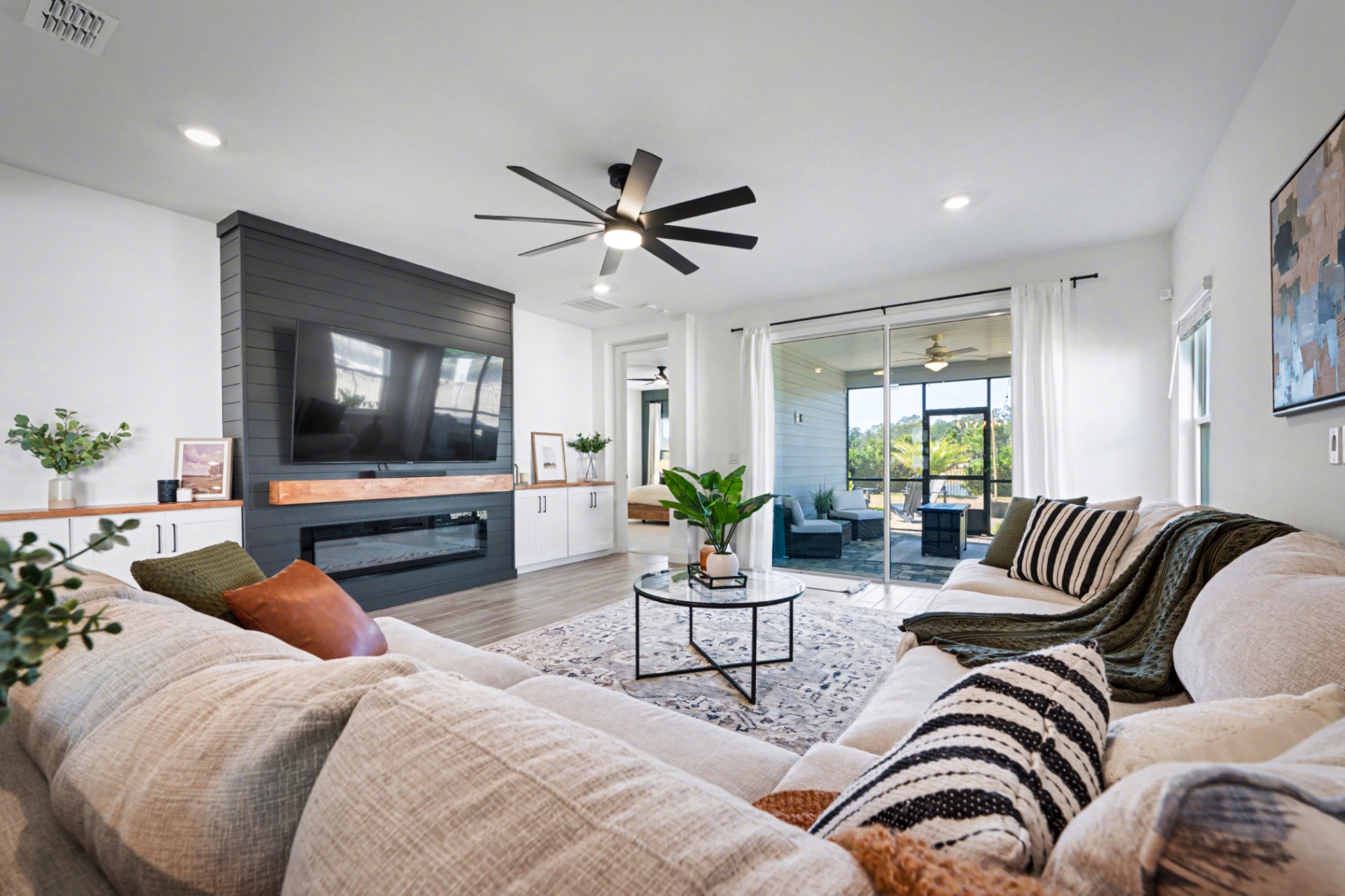
They're not imagining themselves living there long-term. They're imagining themselves on vacation , which means your photos need to feel like vacation.
Lifestyle Shots Aren't Optional , They're the Whole Point
In residential sales photography, lifestyle shots are a nice touch. A bowl of lemons on the counter. A throw blanket artfully draped on the sofa.
For vacation rentals, lifestyle elements are the foundation of your entire strategy.
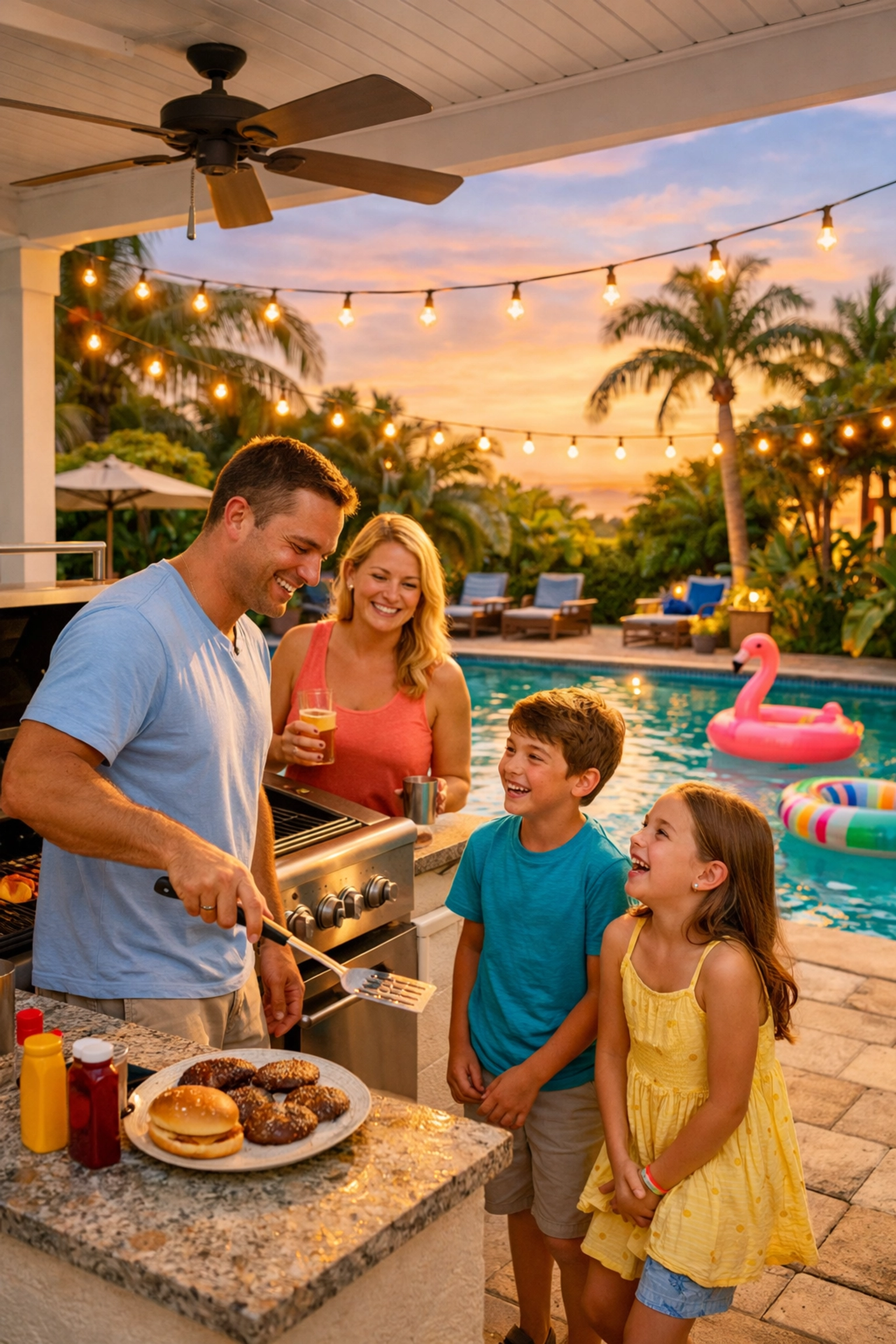
You need photos that show the space in use. The fire pit at dusk with Adirondack chairs pulled close. The pool with someone (or a strategically placed float) suggesting afternoon relaxation. The outdoor grill mid-barbecue.
These aren't decorative details , they're selling points that help potential guests visualize themselves there. The family considering your property for spring break needs to see kids splashing in the pool. The couple browsing for a romantic getaway needs to see the hot tub at sunset.
Residential photography keeps people out of the frame. Vacation rental photography puts the experience front and center.
Your Amenities Are Your Stars
Here's where vacation rental photography really diverges from residential work: amenities get top billing.
That game room? It needs multiple angles. Wide shots that show the full space, close-ups of the pool table or arcade games, and lifestyle shots of it in action.
The outdoor kitchen? Same treatment. Show the full setup, zoom in on the built-in grill and mini-fridge, capture it with the lights on at twilight.
Hot tub? Don't just give it a single exterior shot. Show it from multiple perspectives. Show the view from inside it. Show it lit up at night.
In residential photography, these features get documented. In vacation rental photography, they get showcased. Because when someone's deciding between your property and three others with similar rates, these amenities are the tiebreaker.
We recommend dedicating 5–7 photos just to your hero amenities. It sounds like overkill until you see how those images perform on Airbnb and VRBO.
Location Matters , But Differently
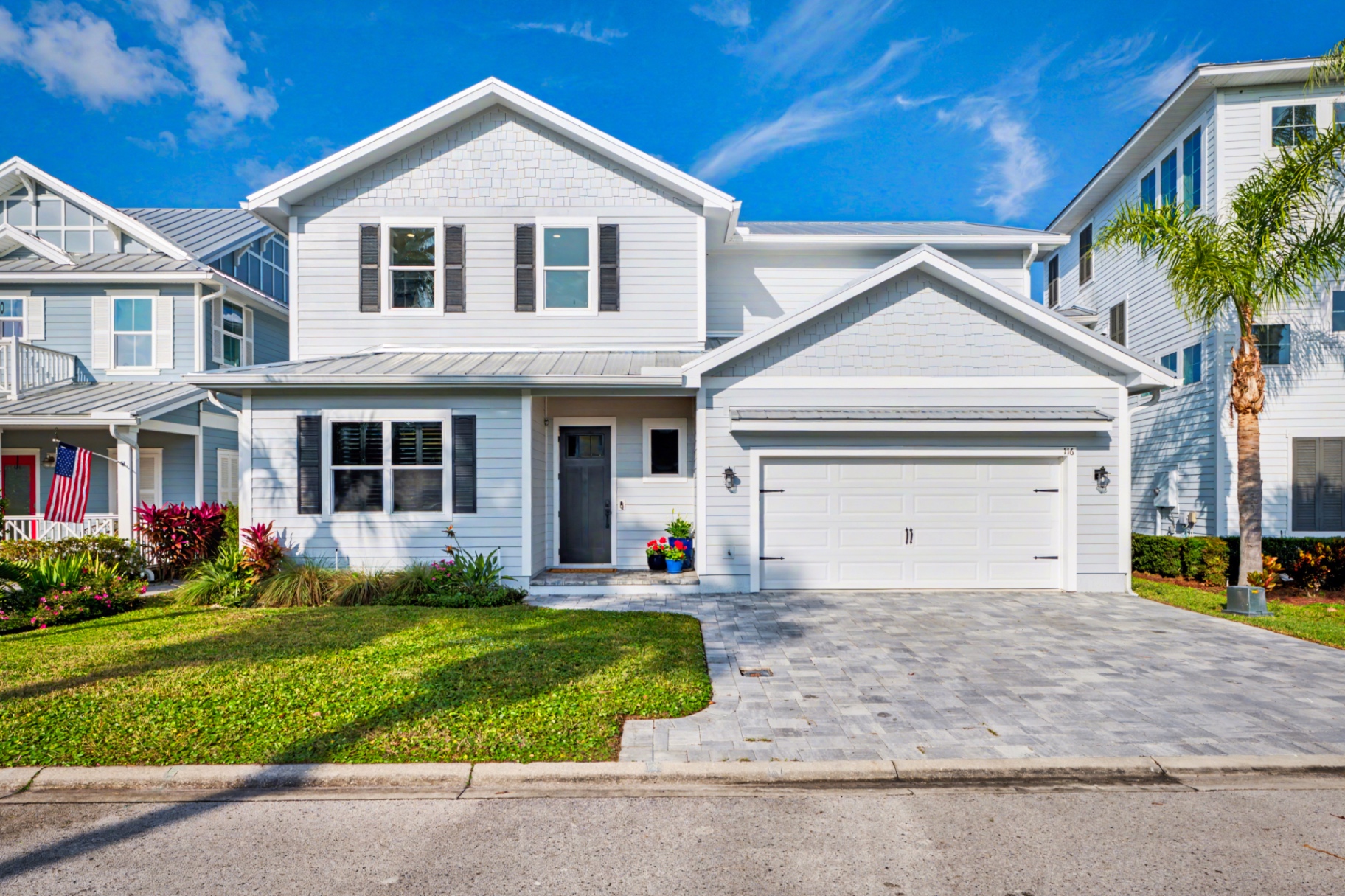
Residential real estate photography focuses on the property itself. Maybe you get a neighborhood shot or two, but the home is the story.
Vacation rental photography tells a bigger story. You're not just marketing the rental , you're marketing the destination.
That means capturing the local context. If your property is near the beach in Sarasota, you need beach shots. If you're in downtown Jacksonville with walkable restaurants and bars, you need streetscape photos that show what's within reach.
Guests want to know what they'll do when they're not at the property. A photo of the nearby pier, the local farmers market, or the waterfront dining district doesn't just add context , it adds value.
This is where local knowledge matters. We've been photographing properties across Florida long enough to know which surrounding shots resonate with vacationers. The lighthouse in St. Augustine. The marina in Naples. The spring-fed rivers in Central Florida.
These aren't background details. They're part of the package you're selling.
The Staging Paradox
Here's where vacation rental photography gets tricky: you need the space to feel inviting and warm , but also clean and neutral.
Residential staging often leans personal. Family photos, books on the nightstand, a lived-in vibe that says "this could be your home."
Vacation rental staging goes the opposite direction. Remove personal items completely. Keep decor minimal but intentional. Fresh flowers on the dining table? Yes. Your collection of seashells from 2014? No.
The goal is to make guests feel like the space is theirs for the week , not like they're staying in someone else's home.
That also means the space needs to be camera-ready at all times. Vacation rental hosts often need new photos quickly , whether they've updated the space, added amenities, or just want to refresh their listings seasonally. A 24-hour turnaround matters when you're competing with hundreds of other properties in the same market.
We deliver edited, listing-ready photos within 24 hours across Florida because we know how fast the vacation rental game moves. Hosts can't wait a week for photos when they're trying to capitalize on peak booking season.
Content Volume Isn't Just Nice to Have
The Licensing Difference: Residential vs. Vacation Rental
This part trips people up because the photos might look similar, but the usage is totally different.
Residential real estate photography licensing is typically for the life of the listing—it’s meant to help sell the home once. The images run on the MLS and major portals, the property goes under contract, and that’s basically the end of the road.
Vacation rental photography is different. It’s usually a long-term commercial license, because you’re not selling the property—you’re selling nights on the calendar. That means you (the host or property manager) can use the photos for years across platforms like Airbnb, VRBO, your own website, social media, email campaigns, and whatever else helps you keep bookings coming in.
Same camera. Different business model. And the licensing should match how you actually use the images.
Residential listings typically need 20–30 photos. Vacation rentals need more.
Why? Because guests can't tour the property before booking. They're making a financial commitment based entirely on what they see online.
That means you need comprehensive coverage. Every bedroom from multiple angles. Every bathroom. Kitchen details. Living spaces. Outdoor areas. Amenities. And yes, floor plans.
Floor plans aren't common in vacation rental marketing, but they should be. Guests want to understand the layout : where the bedrooms are in relation to each other, how the common spaces flow, whether there's privacy between the master suite and the kids' rooms.
A floor plan answers those questions instantly. It builds confidence and reduces booking hesitation.
Same with 3D tours. Tools like Matterport let potential guests "walk through" the space virtually. They can see how rooms connect, get a sense of scale, and confirm that the property matches their expectations.
For vacation rentals, these tools aren't luxuries : they're conversion drivers. Guests who can explore the space virtually are more likely to commit to a booking.
What This Looks Like in Practice
At Coastal Florida Real Estate Media, we approach vacation rental photography differently than residential sales.
We shoot more photos : typically 30–40 images minimum. We prioritize lifestyle shots and amenity coverage. We offer drone footage to show proximity to beaches, golf courses, or downtown areas. We offer 3D tours and floor plans as standard add-ons because we've seen how they impact booking rates.
And we deliver it all within 24 hours, whether you're in Jacksonville, Tampa, Sarasota, or anywhere in between.
Because vacation rental hosts operate on tighter timelines than residential agents. You're not waiting for the perfect closing date : you're competing for bookings this weekend, next month, and throughout the season.
The photography needs to work harder. It needs to be more comprehensive. It needs to sell not just a place to stay, but a vacation worth taking.
The Bottom Line
If you're marketing a vacation rental with residential-style photography, you're playing the wrong game.
Guests don't want to see a well-maintained property : they want to see a vacation they're already imagining. They want to picture themselves in that pool, at that grill, on that deck watching the sunset.
That requires a different approach. More lifestyle shots. More amenity focus. More local context. More content overall.
It requires photography that understands the difference between documenting a home and marketing an experience.
We've been doing this across Florida for years. Same team. Same 24-hour turnaround. Same bright, clean imagery. Just a different strategy for a different market.
Because when you're competing with hundreds of other vacation rentals, the photos aren't just part of your marketing ; they are your marketing.